Zircon (/ˈzɜːrkɒn, -kən/) is a mineral belonging to the group of nesosilicates and is a source of the metal zirconium. Its chemical name is zirconium(IV) silicate, and its corresponding chemical formula is ZrSiO4. An empirical formula showing some of the range of substitution in zircon is (Zr1–y, RE
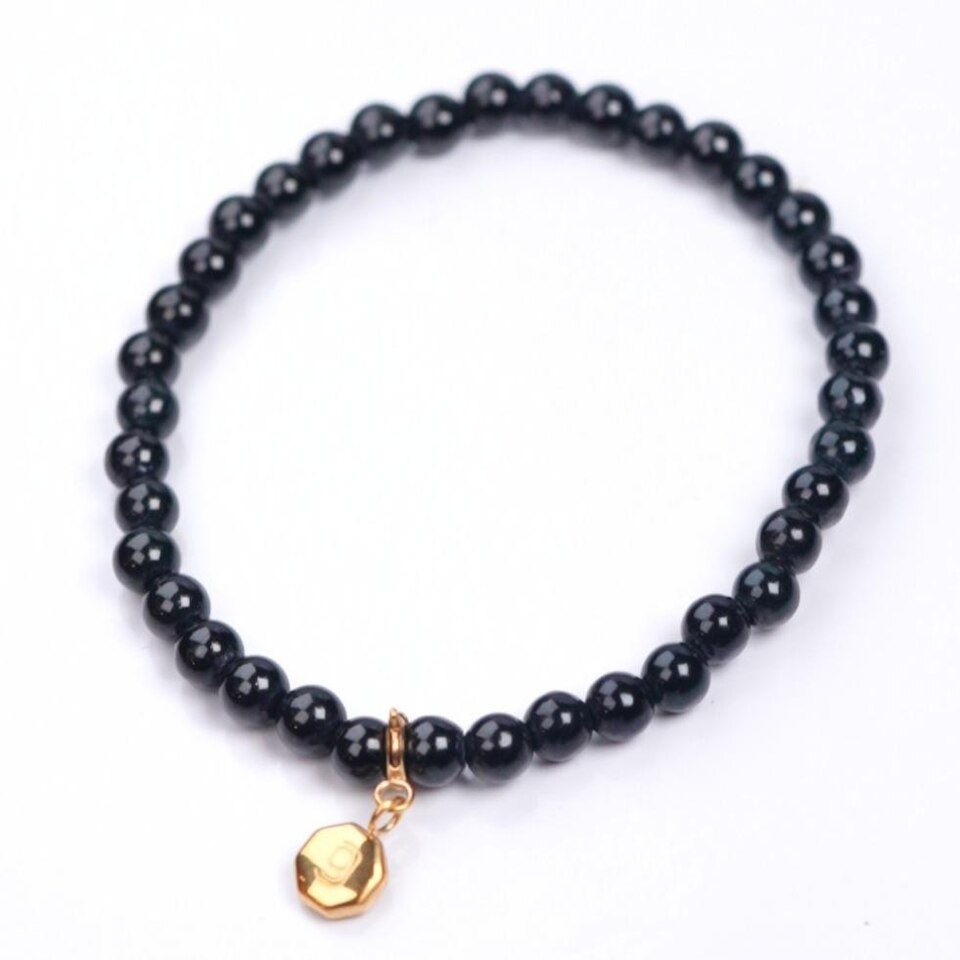
A charm bracelet is a type of bracelet which carries personal jewelled ornaments or "charms", such as decorative pendants or trinkets. The decorative charms usually carry personal or sentimental attachment by the owner. History The wearing of charms may have begun as a form of amulet or talisman due
A parure (/pəˈrʊər/) is a set of various items of matching jewelry, which rose to popularity in early 19th-century Europe. Terminology A parure typically consists of a combination of a matching necklace, earrings, brooch, bracelet and often a diadem or tiara. A variation is the demiparure which cons
Variscite is a relatively rare hydrated aluminium phosphate mineral (AlPO4·2H2O). It is sometimes confused with turquoise; however, variscite is usually greener in color. The green color results from the presence of small amounts of trivalent chromium (Cr). Geology Variscite is a secondary mineral f
Lapis armenus, also known as Armenian stone or lapis stellatus, in natural history, is a variety of precious stone, resembling lapis lazuli, except that it is softer, and instead of veins of pyrite, is intermixed with green. "The Armenian stone" is so similar to lapis lazuli that it has often not be
Eudialyte, whose name derives from the Greek phrase Εὖ διάλυτος, eu dialytos, meaning "well decomposable", is a somewhat rare, nine-member-ring cyclosilicate mineral, which forms in alkaline igneous rocks, such as nepheline syenites. Its name alludes to its ready solubility in acid. Eudialyte was fi
Elbaite, a sodium, lithium, aluminium boro-silicate, with the chemical composition Na(Li1.5Al1.5)Al6Si6O18(BO3)3(OH)4, is a mineral species belonging to the six-member ring cyclosilicate tourmaline group. Elbaite forms three series, with dravite, with fluor-liddicoatite, and with schorl. Due to thes
Albite is a plagioclase feldspar mineral. It is the sodium endmember of the plagioclase solid solution series. It represents a plagioclase with less than 10% anorthite content. The pure albite endmember has the formula NaAlSi3O8. It is a tectosilicate. Its color is usually pure white, hence its name
Architectonic jewellery is a subset of Constructivist studio jewellery that makes use of architectural forms and ideas in the much smaller-scale format of jewellery. Some of the defining elements of architectonic jewellery are linearity, inclusion of geometric elements, undisguised structural elemen
A hair stick (also fazan:发簪 or zanzi:簪子) is a device, long and thin, usually between five and nine inches (12.7 cm to 22.9 cm) long, used to hold a person's hair bun or similar hairstyle in place. It may be straight or tapered; it is often pointed to ease insertion. Like hairpins, hair sticks may be
Kalabubu, sometimes spelled Kala bubu, is a torc (stiff circular necklace) worn by warriors of the people of South Nias of North Sumatra, Indonesia. Kalabubu symbolizes triumph in warfare and heroism. Wearing a kalabubu was believed to protect the wearer from harm. Kalabubu is popularly known as the
The Victoria and Albert Museum (abbreviated V&A) in the United Kingdom is the world's largest museum of applied arts, decorative arts and design, housing a permanent collection of over 2.8 million objects. The Victoria and Albert Museum collection is housed across six sites in the United Kingdom. Th