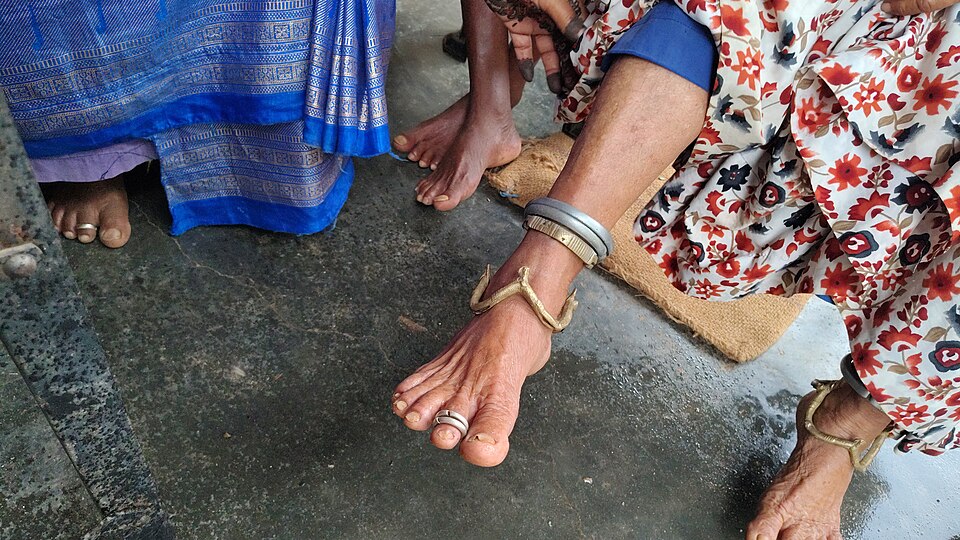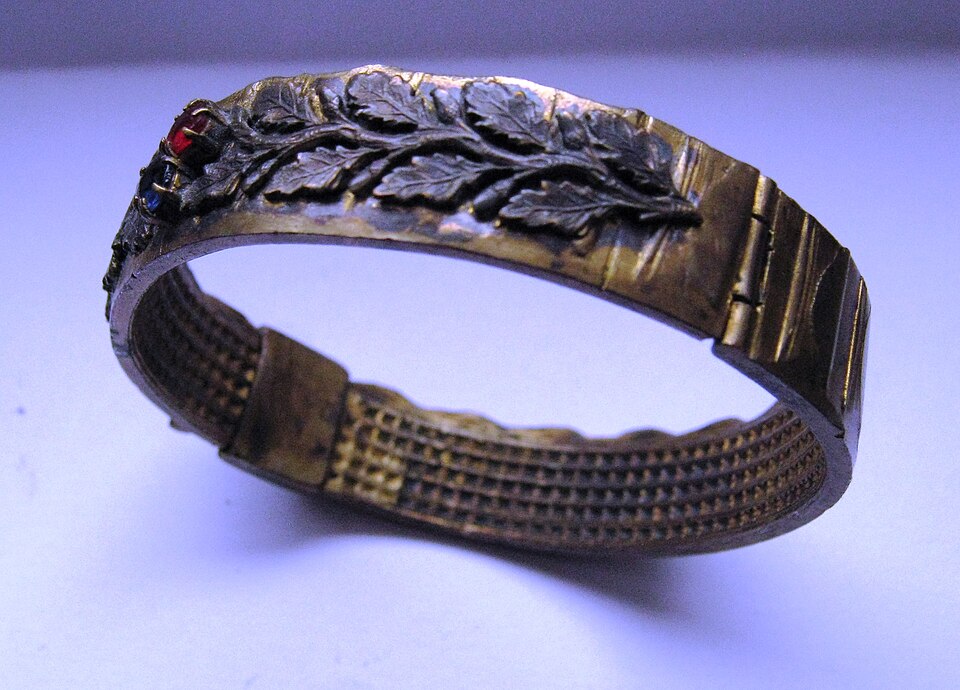
Pair of Jeweled Anklets (Paijeb) from India, ca. 1850–1900
This ca. 1850–1900 Gold with inset jewels object from India is part of The Met’s open-access collection. The article looks at its materials, scale and place in anklet history.
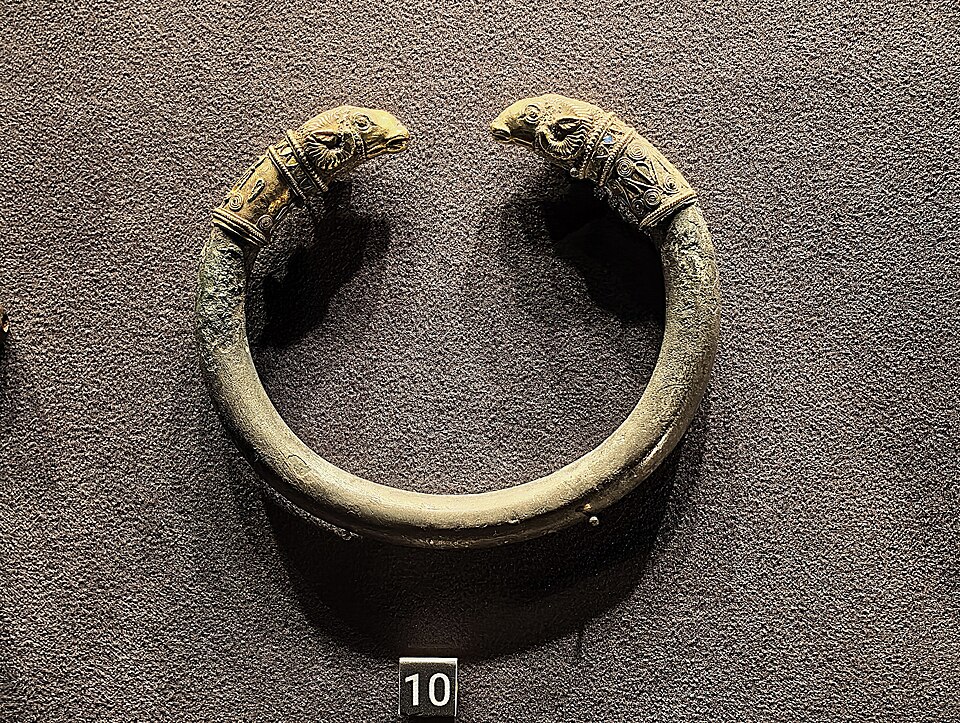
Bracelet of Wah is a ca. 1981–1975 B.C. Faience, linen thread Cord or Thread object from Egypt, now part of The Metropolitan Museum of Art’s open-access collection. The museum’s record identifies it as jewelry and credits it to Rogers Fund and Edward S. Harkness Gift, 1940.
Anklets and related body jewelry have a long history across Egypt. Pieces like this were often made to be worn close to the body, where movement, light and the sound of small elements would have been part of the experience. The survival of the object gives a rare look at how makers combined practical fastening with ornament, and how personal adornment traveled across trade routes and generations.
The piece is made of Faience, linen thread Cord or Thread. Working with this material required a maker to balance weight, flexibility and strength: an anklet has to stay in place while the wearer walks, yet remain comfortable against the skin. The museum’s dimensions — Overall length 45.5 cm (17 15/16 in.); beads only 11.3 cm (4 7/16 in.) — show the scale of the work and help place it alongside other surviving examples of the period.
From a modern styling point of view, the piece is a reminder that anklets can be both delicate and structural. Its Faience, linen thread Cord or Thread surface and ca. 1981–1975 B.C. form pair naturally with simple sandals, bare ankles or a stack of fine chains. The object is also a useful reference for anyone interested in how historical jewelry solved the same problems of fit, closure and comfort that designers still work with today.
Object: The Metropolitan Museum of Art, CC0 (public domain). View the object record. Cover image: Wikimedia Commons, CC0/public domain. This article is original editorial text written for Xiaofei001.
This ca. 1850–1900 Gold with inset jewels object from India is part of The Met’s open-access collection. The article looks at its materials, scale and place in anklet history.
This 305–30 BCE Bronze object from Egypt is part of The Met’s open-access collection. The article looks at its materials, scale and place in anklet history.
This 500–480 BCE Terracotta object from Greek, Attic is part of The Met’s open-access collection. The article looks at its materials, scale and place in anklet history.